Showing posts with label South Africa. Show all posts

Saturday, March 27, 2010

Black, White and Gold: Johannesburg in a Day

In South Africa, just about everywhere you go, the word on everyone's lips seems to be 'crime'. Crime in the cities, crime in the country, crime with guns, knives and fists, sex crime, gang crime, war crime...You begin to wonder what people would talk about at the dinner table if it weren't for rape and homicide. You also begin to wonder how much of this dinner-table gossip has directly contributed in the erection of high cement walls trimmed with electrical fencing, and how much of it might well be entirely unnecessary.

Nowhere is the topic hotter than in Johannesburg, where the extremes of poverty and wealth compounded with the ubiquity of illegal firearms make for an often deadly combination. Although we remain skeptical that Johannesburg is in fact overrun with gun-toting criminals who would kill for an iPhone, we were swayed by the stories of fellow travellers (some of whom were mugged before even leaving the train station) and decided to base ourselves in Pretoria, about 50k from the madness.

With its colonial government buildings, wide tree-lined avenues and malls teeming with moneyed teenagers and familiar brand names, Pretoria did have a safe, sedate feel. Walking in the suburbs, passing the dignified embassies of Algeria, Slovakia and Singapore (Canada's was a mauve, stuccoed eyesore straight out of Richmond, BC) you couldn't possibly feel further from harm. But aside from the city's graceful gardens and buildings, and a handful of uninspiring museums, our attention was inevitably drawn to its louder, more vibrant and extravagant neighbour: Jozi, Jo'burg, eGoli – Johannesburg.

Given all the negative things we'd heard about Jo'burg (and the fact that we lacked our own transport) we opted to stretch our budget and sign up for an organized tour. Not ten minutes in, we were regretting our decision, as our tour guide – a doddering Afrikaaner woman who had apparently been in the business for 25 years – turned out to be about the least informed 'local expert' one could possibly imagine. Half of the things she told us either came from the tour brochure or were written on a plaque right in front of us. It was like like paying $500 for a university course, only to be read to from the textbook by someone with a PhD in the subject. However, we did have to give her credit for knowing where all the stars stay when they come to Johannesburg – and for having an (almost) close encounter with Richard Branson.

Despite our guide's inability to tell us a single thing we didn't already know, and her blatant disrespect for, well, just about everything, she did serve her purpose of getting us to the sights and home again. First, we visited the Hector Pieterson museum, which commemorates the struggle for equality, with particular attention paid to the role that youth played. In June 1976, school children in Soweto marched to the police station to protest against the implementation of Afrikaans as the medium of instruction in their schools. More or less completely unprovoked (accounts differ – some argue that the children captured/beat/set fire to a police dog) police opened fire on the children. In about fifteen minutes, 23 children were shot and killed, including Hector Pieterson, a 13-year old boy who became an icon of the struggle when this picture was published in newspapers around the world.

A few blocks away from the museum is Nkagane street – the only street in the world where two Nobel Prize winners have lived (Nelson Mandela and Desmond Tutu). The Mandela home has been turned into a museum, where tourists can wander through rooms showcasing photos and memorabilia of South Africa's favourite political family. Of particular interest are the letters between Nelson Mandela and his daughters Zeni and Zindzi, and certificate from the CIA apologizing for their part in his arrest and subsequent 27 years of imprisonment.

Both museums offered sobering insights into South Africa's turbulent past, but for us, the most affecting experience came late in the day at the Apartheid Museum. Deliberately constructed to reflect the sombre, restricted atmosphere of apartheid, visitors enter the museum through either the 'Blankes' or 'Nie-Blankes' entrance – race is assigned at random. Scott is white and I am black. Through the first corridor, I can see and hear him, but a wall of bars separates us – whites and blacks do not mix. Reunited, we spent the next three hours immersed in the horrors of (and eventual triumphs over) apartheid. At every turn, you are confronted with candid black and white photographs of township life, shockingly racist excerpts from Nationalist Party speeches, video clips of resisters being gunned down by police. In one room, below a series of hanging nooses, you learn about the 121 political prisoners who died under apartheid rule, many of them at the hands of the authorities who created cover-up suicide stories to mask the true circumstances surrounding their deaths. Despite feeling a bit overwhelmed with information (the museum spans about 300 years of compelling history) it is the personal accounts of those who lived it that resonate for long after you leave the museum. You can't help but be absolutely awe-struck by their perseverance in the face of such crushing oppression. You also can't help but be similarly awe-struck by how long it was allowed to continue, finally coming to an end a mere 16 years ago.

Regardless of Johannesburg's reputation for brutality and lawlessness, there's no denying that it's the country's – and perhaps the continent's – epicentre. People aren't leaving the city, they're flocking to it. Long after the gold mines (which were the city's initial raison d'etre) have closed, people from all over Africa continue to be drawn to Jo'burg, for its reckless consumerism, its vibrant arts scene, its endless possibilities. Sixty years after Nelson Mandela and Walter Sisulu opened the country's first black law firm here, in a society divided along racial lines, Johannesburg has emerged from apartheid a complicated city, scarred, but forever promising.

Thursday, March 25, 2010

Durban

If this entry comes off as coloured slightly in the negative, it is possibly only partly the fault of the city – in Durban we had to endure the final in a series of camera woes, where we were charged R200 to be told Alanna's year-old Canon (which she'd carried from Port St. John's, where it came in contact with a very mischievous Indian Ocean) was basically unfixable. Alas. We've since shelled out for a new one and the photos will resume as we get up to date. Since we have no photographic evidence of Durban, I'll throw in some random photos of the trip so far, and we can all pretend they're relevant.

In Cape Town, in the Castle of Good Hope Prison. All the wooden beams in the cells were covered with delightfully typographic carvings, and were often not without a sense of humour.

In Kirstenbosch Botanical Gardens, Cape Town. A botanist with some family issues?

We both knew little about Durban before embarking on our trip, but over the course of our journey it has earned itself a mediocre reputation, and looks to be hot on Joburg's heels as the least safe place in the country – the big wall-map at our hostel had suggestions of where not to go. Much of the tourism literature markets the city as a beach-time summer-fun city, less for backpackers and more for those with a vehicle and a family and an eye on resort accommodation. The city sports an urban beachfront in the tradition of Waikiki and Miami Beach, and dolphin imagery abounds.

Ostrich eggs at the supermarket in Outshoorn, the 'Ostrich Capital of the World.' R29 is about $4.

In Cango Caves, Outshoorn. Crawling through tiny holes very far underground, lots of fun!

Behind the beach, the downtown core is a dense grid of drab apartheid-era office towers, dusty Victorian architecture, and a significant (so we're told) number of Art Deco buildings, in all stages of repair and lack thereof. Like every South African hub, Durban is in the midst of a comprehensive facelift prior to the World Cup – most noticeably in the renaming of streets to reflect a more historically representative nation. Bid adieu to the anglo comforts of Alice Street and Point Road, say hello to Masabalala Yengwa Avenue. The marathon-long blocks are crammed with tiny businesses, and, as is common in these parts, those unable to afford retail space simply set up shop in the gutter. Opposite the supermarket a man had established his own, and on a shanty plywood table was milk, cheese and other perishables laid out in the 28-degree urban swelter. Cell-phone faceplates seem to be big business, and often we passed young guys on the sidewalk holding a single leather belt or polo shirt, ready for barter.

In Storm's River, among the drab general stores and tourism facilities there was a storefront dedicated solely to some guy's Cadillac collection.

A bathtub at the edge of a cliff at our hostel in Hogsback, a strange Tolkien-themed town way up in the forest. There was a drought and we'd have felt bad filling it up.

For those less keen on sandcastles, Durban's claim to fame is its Indian population, the largest outside of India. The city's novelty dish is 'bunny chow,' basically curry in a bread-bowl (which we didn't eat), and there are a few beautiful mosques around (which we didn't see). We spent most of our tourist hours trudging through areas we ought not to be, grappling with an info-booth clerk's incorrect directions to the pick-up point for a city tour (which we didn't find). The only real worthwhile thing we had time for was the Victoria Street Market, a two-storey curio mecca in a bland pinkish building. Apparently, the original market had a little more historical pizzazz, but became too unsafe for tourists, though the new one is still rather close to one of our hostel's no-go areas. Inside we browsed dunes of souvenirs: an endless maze of Big Five carvings and salad spoons. One can only hope whoever makes all this stuff is earning a fair wage. The rules of African retail apply, and if the stall owners were any more coercive they'd have lassos. We explored the less foreigner-centric fish and meat market next door, but the four-dozen-too-many severed sheep-heads on display (skin on, skin off, your choice!) made our visit somewhat brief.

At Bulungula we met Evan from Hamilton, Ont. who was in the process of fashioning a cribbage board with scrap wood and a hand-drill.

Stoney Ginger Beer is our carbonated beverage of choice in Africa. Spicy ginger bite, beats Canada Dry tenfold! They often come in reusable silkscreened glass bottles like the old days.

So that was Durban. I feel we didn't completely give it a fair chance, but even if we did, my guess is that the city's most appealing sides would reveal themselves only in the company of an experienced local. For us it was the place that stole our cameras away, the place that overcharged for minibus rides, the place where not even the tourist-centre staff seemed to understand the bewildering city grid.

Wednesday, March 24, 2010

Up to the Roof

Southern Drakensberg


It hurts to say goodbye to the beach, but if it means installing yourself at the foot of the most badass mountain range in the world for a few days, well, wounds heal fast. I speak of the Drakensburg, a crescent of mountains which spoon the northeastern edge of Lesotho. While unassuming on a map, the pure age of these mountains reduces us twenty-three year-olds to mere specks in space and time. In a day's walk one can find dinosaur footprints in the hills, Bushman rock art in the caves, rainbow trout in the rivers (introduced by homesick Scottish settlers, natch) and the firepits of marijuana smugglers hiking their loot overnight into South Africa – basically all of prehistory up until, let's say, fifteen minutes ago. Before passing into Lesotho proper, we stayed at a backpackers' called Sani Lodge just outside and, because we can smell a bargain when we see one, settled into a three-night package deal which included all meals and a couple guided tours.

And we're barely at the top!
The main draw of this corner of the Drak is Sani Pass, a frighteningly ill-maintained set of hairpin switchbacks that weave up the mountains to the Lesotho border at the summit. The route is 4WD-only, by law. We were lucky enough to have the tour to ourselves – just us, a beige 1970's Land Rover, and our guide Matthew. We gathered that he'd recently broken up with his girlfriend, and the day was nuanced with a subtext of loneliness and regret.

The drive to the base of the pass is scenic beyond comprehension, rippled velvet-green slopes topped with stacked plateaus of basalt and sandstone. Being proponents of self-guided travelling we came to understand the value of a tour guide – the amount of knowledge our man Matthew could emit in a single day was astounding. An evolutionary quirk, for example, dictates that the Drakensburg's foliage must burn up once every five years to stay healthy, as certain seeds won't germinate without fire.

The switchbacks of Sani Pass. There was a dead horse at the side of the road.


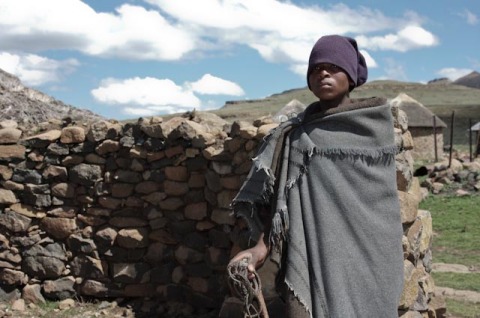
At the top of Sani Pass, vehicle and bowels intact, we crossed the border. Once again, the shift in scenery was abrupt: the lush grasses gave way to barren rock, and stark shrubby mountains extended into the distance at unlimited visibility. We were in Lesotho (le-su-tu), the most elevated country in the world, the so-called 'Roof of Africa.' The country is completely surrounded by South Africa, but maintains a distinct and unique culture. On a stop for lunch we were met by three Basotho shepherds (the Basotho being the people of Lesotho, their language being Sesotho). The Basotho are a herding culture, and boys as young as fourteen are sent into the mountains to graze sheep and mohair goats, working alone or in pairs and living in makeshift stone huts, hours from the nearest town. Their get-up is the instantly recognizable combination of balaclava, heavy wool blanket draped over the shoulders, and galoshes, all in drab grey or brown. We saw them throughout the country, out on the hills or mounted on ponies next to the highway, and they have a timeless air about them, both grubby and dignified. One of the fellows we met played a homemade musical instrument made from string, a stick and a tin can. From their looks, one imagines them confounded by simple kitchen appliances.

All that said, I am still not accustomed to poking cameras into the faces of strangers, so I'll have to (bashfully) rely on this poached photo from a photography blog, where you'll find another informative post about the area surrounding Sani Pass.

Thanks, young shepherd! Thanks, John Queenan!

On the same tour we also had the privilege of visiting a village and popping into a local home for some homemade bread (cooked in cast-iron over a sheep-dung fire, very tasty) and traditionally-brewed sorghum beer (think very watered-down bread dough and you're getting close). Because of the short shelf-lives of such items in a landscape without refrigeration, any household with a surplus of perishables will sell them off, signaling the sale with a coloured flag outside the hut: red for meat, green for vegetables, white for beer, and yellow also for beer.


The following day we set out on a hiking tour through the Drakensburg foothills, and were once again alone with our guide. We explored the scenery and learned about the Bushmen, the true indigenous people of the area who hunted and gathered for millennia until as late as 150 years ago, when they were rendered basically extinct by white settlers and emigrating tribes from the north. While the Bushmen, or San people, lived all the way out to Namibia, The Drakensberg shelters the largest and most well-preserved collection of their paintings, and is a World Heritage Site because of it. There occurs much speculation over the paintings' intent, but the reigning theory is that they're depictions of witch-doctors' trance-fed hallucinations. In keeping with early rock art elsewhere, they look to be hunt fantasies – fat, healthy animals, in this case eland, pursued by armies of muscular men. Being somewhat of a big-game enthusiast myself, I got hot under the collar just looking at them, and had to go dip my head in a creek.

On the hike we spotted three species of antelope, they all looked basically the same but our guide was excited.


Lesotho

The taxi rank at the foot of Sani Pass is a decomissioned trade station from when the shepherds would bring their wool down on horseback in exchange for goods. This occurred until the 80's, now the wool is transported directly to Durban, the nearest city.

For most people one trip up Sani Pass is enough, but we did it doubly – first in a Land Rover, spacious, and with snack breaks; and two days later, crammed into a rickety van with our backpacks and fourteen other people. While Sani Pass is a scenic and thrilling tourist attraction (I've so far neglected to mention the “The Highest Pub in Africa” waiting for foreigners at the summit), it is also a functioning border post and the most viable way in and out of Lesotho for many of its residents, who travel to nearby Durban for supplies. The minibus taxis running up and down the pass are outfitted with four-wheel-drive, but they do lack the turning radius of the SUVs, and we had to pull three-point turns around some of the switchbacks, reversing tooth-clenchingly close to the precipice. Through customs at the top, we were met with women selling homemade balls of bread and maize porridge. The summit of Sani Pass is barely a kilometer away from the highest point on the continent south of Kilimanjaro, and it was foggy and vaguely Mongolian.

We came to spend over a week in the country, for the first time relying solely on the local minibusses to get around. We slept everywhere from a local Farmer's Training Center to an prim thatched-roof guest cottage, to a puzzling B&B in a building that would have passed for abandoned had we not known otherwise. We did feel Lesotho lacks the tourism infrastructure of its lone neighbour, especially for those without their own transport. But who can blame them, as the country gets few visitors – many travelers opt to visit Swaziland, South Africa's other doughnut-hole country, instead. Accommodation was ill-marked and restaurants were scarce, and there was often just not that much to do for a couple of budget sightseers as us.

Sunrise over Mokhotlong

Morija Guest House

Though whatever Lesotho lacks in conventional sights, it makes up for ten-fold in its friendliness and its people. While we met many wonderful folk in South Africa, the country can't rival Lesotho in the almost unanimous warmth and openness of its citizens. From a bumbling tourist's perspective, the sight of a determined group of young men marching with conviction in your direction (in a large, dirty, overwhelming African capital city, no less) is supposed to be a signal to flee. But in Maseru, after we'd unveiled our guidebook to get our bearings, the men tromped up and proclaimed, “why are you looking at that book when you could so easily be asking us?” Each member of the group introduced himself with a handshake, and we received a set of clear and eloquent directions, and they offered their phone numbers if we happened to lose our way again. Each time we wore a lost look, someone would abandon their post to help us on our way, and all we had to do at the minibus ranks was show our pale Canadian faces and we'd be asked our destination and guided to the correct vehicle.

A Mokhotlong taxi rank, under one of Lesotho's spontaneous and short-lived storm-clouds.

The bad news is that I decided to abandon my camera on one such minibus, and, with Alanna's out of commission from water damage, we are short on photographic evidence of this pretty little country and the dinosaur footprints, crazy spiral plants, and god-awful breakfasts contained therein. It is depressing how much the lack of a little piece of electronics can hamper one's experience of a place, but at least we were without in Lesotho, a country that, while admittedly not all photogenic all of the time, left its indelible mark in other ways.

Monday, March 1, 2010

Bulungula


When you're traveling for six months in Africa, and simply updating your blog sets you back about eight dollars, you're constantly on the look-out for ways to save a few bucks. So when we heard that Bulungula Lodge offers free first night accommodation to those arriving by public transport, we jumped at the opportunity. The hostel staff in Coffee Bay (our departure point) were skeptical that it could be done, but with a simple set of directions sent to us by the staff at Bulungula, we hailed our first ride with confidence.

I should probably clarify what I mean by 'public transport' for those of you who might, like I did, mistake it for an organized, safe and comfortable way of getting from point A to point B. When it comes to public transport in South Africa, organization, safety and comfort are all quite literally foreign concepts. There are no timetables, formal stops, regulations about baggage or alcohol consumption, and certainly no capacity limits. You will never see a 'Bus Full' sign here. What you will see are customized vehicles emblazoned with things like 'Thanks God!' and 'Shut Up!' careening around pot holes at break-neck speed blaring everything from gangster rap to gospel. And unless you're claustrophobic or you really have to pee, it's really not a half bad way of getting around.

The first two minibus trips were surprisingly quick and painless. Disembarking at the taxi rank in Elliotdale, we were greeted by two lively Xhosa men who were extremely eager to take us to Nkanya (the closest town to Bulungula) non-stop, straight away, for the low price of R400 (about $60). Unfortunately for them, we're not as gullible as the colour of our skin would have them believe, and after telling them that R400 was much too much several times, they released my bag and let us find our own way. In the end, the two-hour trip cost us R25.

Nearing the end of the terribly-maintained rural road to Nkanya, the driver asked us where exactly we were trying to get to. When we told him Bulungula, he informed us that we should have gotten off a long time ago, that it was too far to walk, and that there was no transport that could take us there. He knew nothing of the river we were supposed to cross, or the ferry that allegedly operated there. Not wanting to abandon two clueless tourists on the side of the road, he called his friend, who thankfully knew a bit more about the area, and assured him that we had not in fact gone too far, and that we were still very much on track. From the end of the road, we need only hike a kilometre down the hill to the river, where we would be met by the eskepeni (ferry) operator, who would point us in the direction of the lodge.


When we got to the river, there was no sign of any type of conventional ferry, and the only people around were two very energetic kids monkeying about in a nearby tree. When Scott asked them if this is where the ferry came, they said 'yes'. When Scott asked them if he should just shout for the ferry, they said 'yes'. It quickly became apparent that the answer to every question was going to be 'yes'. Thankfully, after less than five minutes of wondering what to do, a boy seemingly sprung from the reeds on the opposite riverbed, waved at us and pushed a rowboat into the water. When he first reached us, he seemed like a very serious, diligent little ten-year-old, but once he'd ensured that we were safely in the boat and that the mud had been cleaned off my sandals, he became very chatty, albeit mostly in a language we did not understand. By the time we left him, about all we had ascertained was that he had babies in his family, watched boxing on TV, and was good at fishing. Also, I am a girl and Scott is a boy. It was nothing short of a revelatory journey.

From the shore, it was about a forty-five minute walk through undulating green hills dotted with multicoloured rondavels, maize fields and roaming donkeys and cattle. Before we even reached the lodge, we could tell that we were going to regret our decision to stay only three nights.

We were greeted by a very bubbly and animated host, who excitedly showed us around the property, making stops at the paraffin-powered rocket showers, the composting toilets and the rain-water collection system. It seemed as though every form of natural energy was being harnessed, and that the environmental impact of the lodge was very consciously being kept to a minimum. In fact, from the very beginning, we could tell that Bulungula was hands down the least intrusive (socially, culturally, environmentally) place we had stayed and almost seamlessly integrated with the place and its people. Literally, figuratively, and in the best way possible, it was miles away from anything we had experienced.

Recognize this guy? All the photos in our header were taken at Bulungula, and this could very well be the same donkey that appears up there.


Our humble abode for three nights

Bulungula just seems to be doing everything right. While our hostel at Coffee Bay also claims Fair Trade accreditation and extensive community involvement, Bulungula did things a bit differently, and in our view, a bit better. While Coffee Bay created jobs for locals to clean, cook and run the hostel, Bulungula encouraged locals to create their own, by setting up their own separate businesses, running village tours, taking guests on fishing trips, or operating a restaurant. Since these are private businesses, guests of the lodge pay them directly, eliminating the middle man, and empowering them in a way that I don't think is fully achieved by employing them as housekeeping staff. The other obvious difference was that the lodge was physically within the village. There were no gates or barriers separating the tourists from the locals – village children and dogs ran freely through the lodge, and guests were encouraged to wander the hills and talk to the locals (who as a community own 40% of the lodge). Notably, this was the only place so far where we were encouraged to pick up any of the local language.


Miles and miles of sand, why not practice your hand stand?

A morning dip in the Indian Ocean

On our second day, we signed up for a guided village walk, where we met some locals and developed a deeper appreciation for their way of life – much of which seems virtually unchanged for centuries. We visited the home of the sangoma (traditional healer), the headman (second-in-command to the chief) and the shebeen (the village pub, where men and women congregate to talk and drink Xhosa beer out of a communal recycled paint can). We were warmly received wherever we went, and were made to promise that we'd come back, and next time, with friends.

We were also taken to various projects either initiated or funded by the lodge. There was a lemongrass farm used for producing rooibos tea, a restaurant serving tea and pancakes, an agricultural diversification project, and most recently, an impressively-equipped and well-run pre-school. The school fees are entirely covered by proceeds of the lodge and donations, and the only requirement of enrollment is that at least one parent makes him/herself available once a month to come to the pre-school to work in the kitchen or help out as needed. It was pretty cool to step into a classroom that looked identical to one you would find in Canada, save the fact that all the posters for fruits and seasons and animals were in Xhosa (plus, you know, it was housed in a thatched-roof rondavel). 47 children aged 3-6 attend the school daily, with additional after-school programs running a few days a week for older children.


While Bulungula is probably far from most people's ideas of a utopia (clothes must be washed by hand, electricity is scarce when it's cloudy, the toilets kind of smell), you can't help but feel a sense of peace here. In the modern world, we are supposed to be increasingly connected, but when you visit Bulungula, you realize that in fact, in many ways, we are moving in reverse. When you talk to the people and see the way they live – close to the earth and each other – you'll find yourself wondering how and why we have deviated so dramatically from such a harmonious existence. Although there are no doubt problems here, you feel assured that they will not be glazed over for the benefit of tourists, and that the solutions will be both democratic and sustainable. More than anything, you will leave Bulungula with the memory of an ineffably beautiful place, and the inspiration to lead a more grounded life.


Sunday, February 28, 2010

A Walk on the Wild Coast

A typical skyline on the Transkei, each home with its own small crop of maize.

Whoever draws the borders in South Africa has an easy job. I assume the process is longer and more involved than simply swatting at a map with a felt pen, but all the boundaries through which we've passed, both interprovincial and international (as this entry comes to you from the Mountain Kingdom of Lesotho) have been lessons in contrast. The first border we crossed (and it's the first that's most memorable, don't you find?) was from the Western Cape – home to metropolitan Cape Town, the moneyed Winelands, and the aforementioned Garden Route – to the Eastern Cape, South Africa's poorest province, and for good reason.

During apartheid years, much of the province was cordoned off as an independent nation, the Transkei: a 'homeland' where millions of black South Africans – those unable to contribute economically – were relocated, essentially making them foreigners in their own country. It was reincorporated in 1994, though the area is still over-populated, with little industry and infrastructure, and its inhabitants, mainly of the Xhosa tribe, live in traditional round thatched-roof huts. As we passed into the Eastern Cape the difference was almost immediate: the dense mountains, forests and numerous gas stations gave way to shallow hills of grassy farmland, dotted with livestock, small villages, and women with various cargo balanced on their heads. Moving into the Transkei (the old border post sits across the Kei River, literally 'trans Kei') meant another shift – less money, more huts, and even more livestock, often on the road. (A favourite joke here is the Transkei Big Five: goats, sheep, cattle, horses and donkeys.) Both Nelson Mandela and his successor Thabo Mbeki grew up in the Transkei, and the house-arrest compound where Mandela spent the final years of his sentence sits not far from the highway – we passed it on the 20th anniversary of his release.

In the Transkei we spent our time on the Wild Coast, a section of coastline between East London and Port Edward that, with an unfortunate thank-you to its disenfranchised past, is so pristine and undeveloped one forgets they're in the 21st century. The Africa we felt we'd been missing was finally at our toes: an endless exchange of rocky cliffs and empty beaches in both directions, with barely a four-sided building or stretch of pavement in sight. The Indian Ocean is warm, the beer is cheap, and an ATM is hard to come by.


Looking both directions on Cinsta Beach


Private 'safari tent,' Buccaneer's Backpackers, Cintsa


The cows come down to the beach in the afternoons to cool off and deter ticks, who don't like the salt in the sand. There are dogs everywhere, and if you're a well-fed Transkei dog you may be the happiest dog alive. The dogs here have owners, but no master. We often went for a walk and unwittingly brought a stranger's dog along with us. That said, there are innumerable strays, many in rough shape.


Lonely beach cow in Port St. John's


A village dog near Bulungula.


On a hike to The Gap, a rock formation not far from Second Beach, Port St. John's. On this trail we encountered people headed the opposite direction, as there is a village on top of the hill and this trail is part of their everyday commute. Beats the Massey Tunnel.


After crossing The Gap.


All our accommodation was in or near small villages, but moving between them often required a two-hour drive inland to Mthatha, the former Transkei capital, and back out again, as only hiking trails or four-by-four roads connect each stop. The towns in the area serve mainly as supply outposts for the villiages, often no more than a general store, a bottle (liquor) store and a row of grubby vendors' booths. The poverty on the Wild Coast is apparent, but the people are cheerful and welcoming, and the little tourism the area gets looks to be mostly (but not completely) beneficial.


A cloudy day at the cliffs in Coffee Bay. Goats and Donkeys graze dangerously close to the edge.


On a hike to Hole In The Wall from Coffee Bay. Our guide was Joseph, who grew up in the village and now works at the hostel, leading daily excursions to points of interest.


Hole In The Wall


Joseph bought a few fresh crayfish from some local men and cooked them over the fire. Technically they're out of season and it's illegal to catch them. Alanna and I, not wanting to be complicit in the depletion of the ocean's natural resources, only tasted a little bit.


One hostel employee in Port St. John's (you may remember him as our braai friend from the last entry) says he's been searching for a decade and he's found his paradise, there in the Transkei, next to the beach. It's easy to see why: there's a special atmosphere to the Wild Coast, a rhythm that moves through the virgin scenery and into its people and makes it a hard place to see in your rear-view. Its remoteness and its unhappy history are both a blessing and a curse, and as a tourist, despite the industry's efforts and assurances, one can't help but feel only a little intrusive. But it is a healthy feeling, I think, and merely a symptom of being somewhere so precious.


View over the hills on the drive back from Hole In The Wall.

Friday, February 19, 2010

The Not So Secret Garden

East of Cape Town, the stretch of coastline between Mossel Bay and Port Elizabeth is seen by some as a backpacker's paradise. A combination of hikeable parks, surfer-happy beaches and an efficient network of quality hostels make South Africa's 200k Garden Route a hotspot for beach bums, adrenaline junkies and nature lovers alike. This is where the bungee jumping, whitewater tubing and wave-riding top the to-do lists – though you certainly won't get funny looks for opting to spend the day on the patio, beer in hand. The cherry on top may well be the popular BazBus service – a daily hop-on/hop-off shuttle (with an unlimited time-frame as long as you're moving in one direction) that makes transportation a bit of a non-issue. Naturally, we moved west to east and hit some popular spots as well as some a little off the beaten path.

Our first destination was Knysna (NIZE-nuh), which is situated at the far-end of a sprawling lagoon, flanked at its entrance by two stone outcroppings known as 'the Heads'. Believing they were only accessible by car or pricey paddlewheeler, we didn't arrange to see them, but a wander to the touristy waterfront area turned into a lengthy trek and we did manage to reach this dramatic rocky gateway on foot.


The lagoon itself is pretty, though overdevelopment tarnishes the landscape some. The summer homes that crowd the shore (and the likely-mistitled Leisure Island) are also a threat to the Knysna seahorse, who makes its home in the lagoon's sea grassy shallows. There were two live specimens on display at a deli in the waterfront area, much to Alanna's delight. They are bizarre and fascinating creatures.

On the stroll home we detoured into the town's industrial district to pay a visit to Mitchell's Brewery, South Africa's largest (and possibly sole) independent brewer, hoping for a tour. It proved a little pricey – especially since we'd splurged for a scenic lunch at The Heads an hour earlier – so Scott bought a few bottles instead and settled for a poolside tasting. A couple of the beers held shades of homebrew, but it was a refreshing change from the status quo.


From Knysna, we headed to Nature's Valley, which, judging by the view from our room, is an accurate (though bland) name for the area.


While this isn't where the granola bars come from, Wild Spirit Lodge certainly did cater to the granola-eating, djembe-tapping crowd. Fresh off the hostel party circuit, the serenity and old-world hospitality were a welcome change, as were the comprehensive recycling and composting facilities.


The main draw of the area is its well-maintained network of trails through the indigenous forests of Tsitsikamma National Park. Our longest hike led us along a river and across a beach to a(nother) lagoon -- sandy, crystal-clear and full of splashing local children.


After a quick swim, we resumed our hike, forging onwards along a dried-up riverbed in a steep jungle valley. Alanna put on a brave face clearing spiderwebs, while Scott sang the Indiana Jones theme. The trail out of the valley was a grueling stepped climb under the hot mid-afternoon sun, with spectacular views we were too winded to fully appreciate.

While many hostels offer a nightly home-cooked meal for guests (at varying costs) we usually prefer to self-cater. At Wild Spirit, however, we opted to join in for their wholesome and generously portioned vegetarian curry dinner, which did not disappoint. It also gave us the opportunity to chat with some of the other guests – both locals and foreigners – discussions which, wherever we go, inevitably turn to crime, safety, and the realities of South African life. We would assume that most locals would have grown weary of such topics by now, however, the few we've spoken to have been more than willing to provide an insider's perspective on the issue. At Wild Spirit, we talked to a Capetonian currently working as a civilian pilot in Afghanistan, who had a unique perspective on the dangers of working in the Middle East (one stray bullet through his fuselage in 10 months) versus those of living in his home country (where his family, friends and co-workers fell victim to numerous break-ins and assaults over the same period).


After three great nights at Wild Spirit we hopped back on the BazBus (but not before receiving hugs from staff!) and rode to Storm's River, a mere twenty minutes along the highway. Most people we met on the Garden Route had given themselves six or seven days from end to end, whereas we had two weeks and could afford such dilly-dallying. On the way our driver slowed as we passed over the Bloukrans River bridge, site of the bungee jump, so we could have a look at the drop – all 216 meters of it - advertised as the highest in the world. There was much nervous giddying among those who'd signed up for the jump.


Storm's River Village, a single fresh-paved road with a few scattered stores at the end, seems to exist mainly for the sake of tourists and the many 'extreme' outdoor activities they're willing to pay money for. Bungees, bikes, quads, innertubes, abseiling (rapelling), and zip-lines through treetops and across waterfalls were the attractions advertised on the walls and flyer-stands at our hostel. These were all well outside our daily budget, so we again did what we're best at – we hiked to a body of water via a forest. Still within the bounds of Tsitsikamma NP, we touched down at the mouth of Storm's River, where waves against raw rock sent juts of froth hundreds of feet into the air.

Our second day we hiked into Plaatbos Nature Reserve and swam in the river. We'd seen posters advertising blackwater tubing, and now we knew the reason – because of tannins in the earth, the river was tinted a deep red-brown, and when swimming you couldn't see your feet.


While we enjoyed the natural beauty and the ease of travel along the Garden Route, at times the jewel of South Africa seemed a little too shiny, pre-packaged and tourist-geared. While a few areas we visited appeared unspoilt by tourism, many locations seemed to have been tarnished by overdevelopment and commercialization. The upside to this influx in tourists is that many locals are able to earn their livelihood on our dollar – hawking local crafts, acting as guides and providing other valuable services. However if it's fantastic scenery and culture you're after, leave the Garden Route to the surfers and skydivers and find your own piece of paradise further east along the Wild Coast – which is where we headed next.